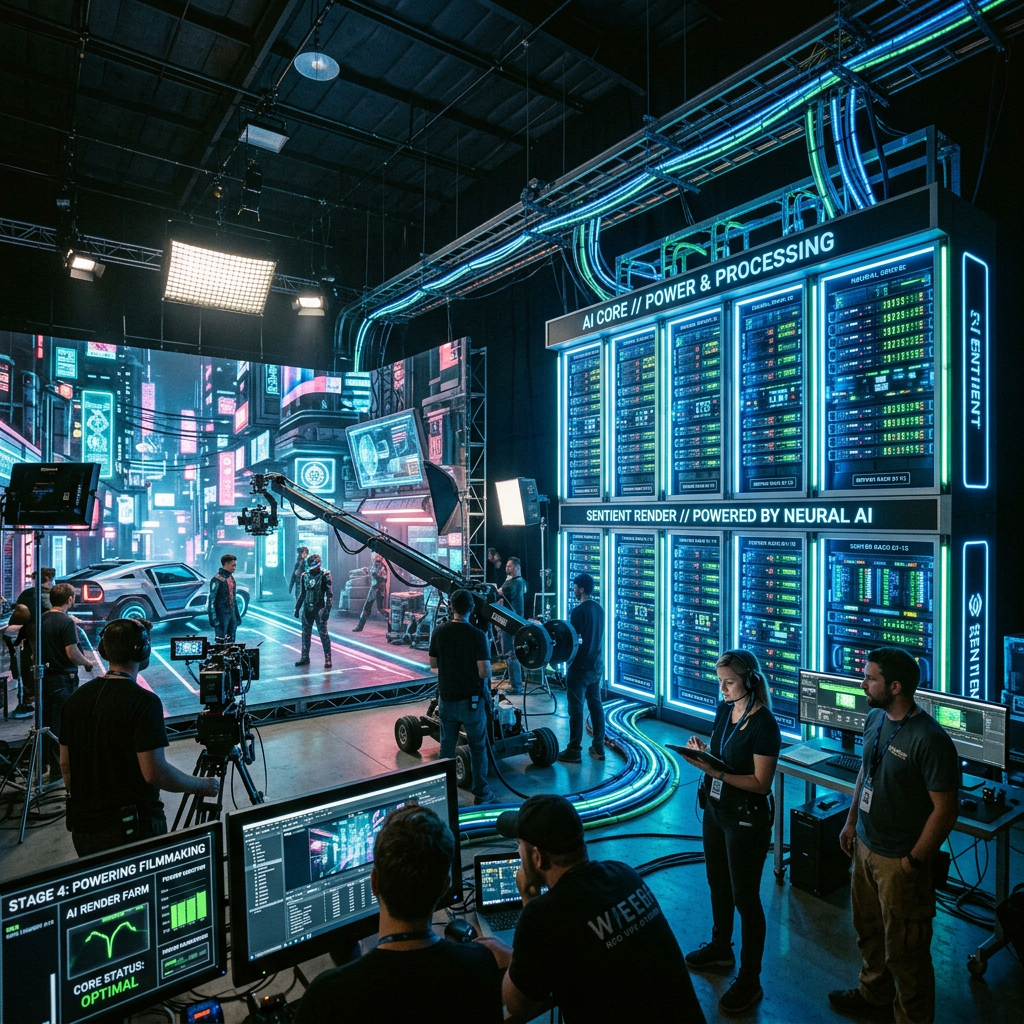
A massive shift is happening at the Cannes Film Festival this week, and it’s sending shockwaves through both Hollywood and Silicon Valley. An indie production team revealed they managed to wrap a feature-length film with a tight total budget of just $500,000.
The jaw-dropping part? The physical production, actors, and equipment only cost $100,000. The remaining $400,000 was spent entirely on raw AI compute power, cloud processing, and high-fidelity rendering.
It is the first real-world look at how the math of content creation is changing in 2026.
The New Production Math Historically, independent filmmakers spent the vast majority of their funding on location scouts, camera crews, lighting setups, and physical logistics. Post-production and visual effects were a fraction of the cost, handled over months of editing.
Now, the formula has completely flipped. By utilizing hyper-realistic generative video models and cinematic environment rendering pipelines, the creators bypassed physical set construction altogether. They traded manual logistics for server time.
Why This Matters for Content Creators This milestone highlights a major trend that every modern creator needs to watch:
The Hardware Bottle-neck: Creativity is no longer limited by how many physical cameras you own, but by how many high-end GPUs you can lease on the cloud.The Miniaturization of Crews: Small, agile teams can now execute massive, cinematic, studio-grade visuals natively from a single laptop setup, provided they have the budget for processing power.The High-Fidelity Standard: As AI rendering costs continue to scale down over the next few years, the gap between multi-million dollar studio projects and independent creators will completely vanish.
Whether you are building a media site, editing YouTube shorts, or directing a feature film, the takeaway is clear: the most valuable skill set today isn't managing physical assets—it's understanding how to allocate digital leverage.