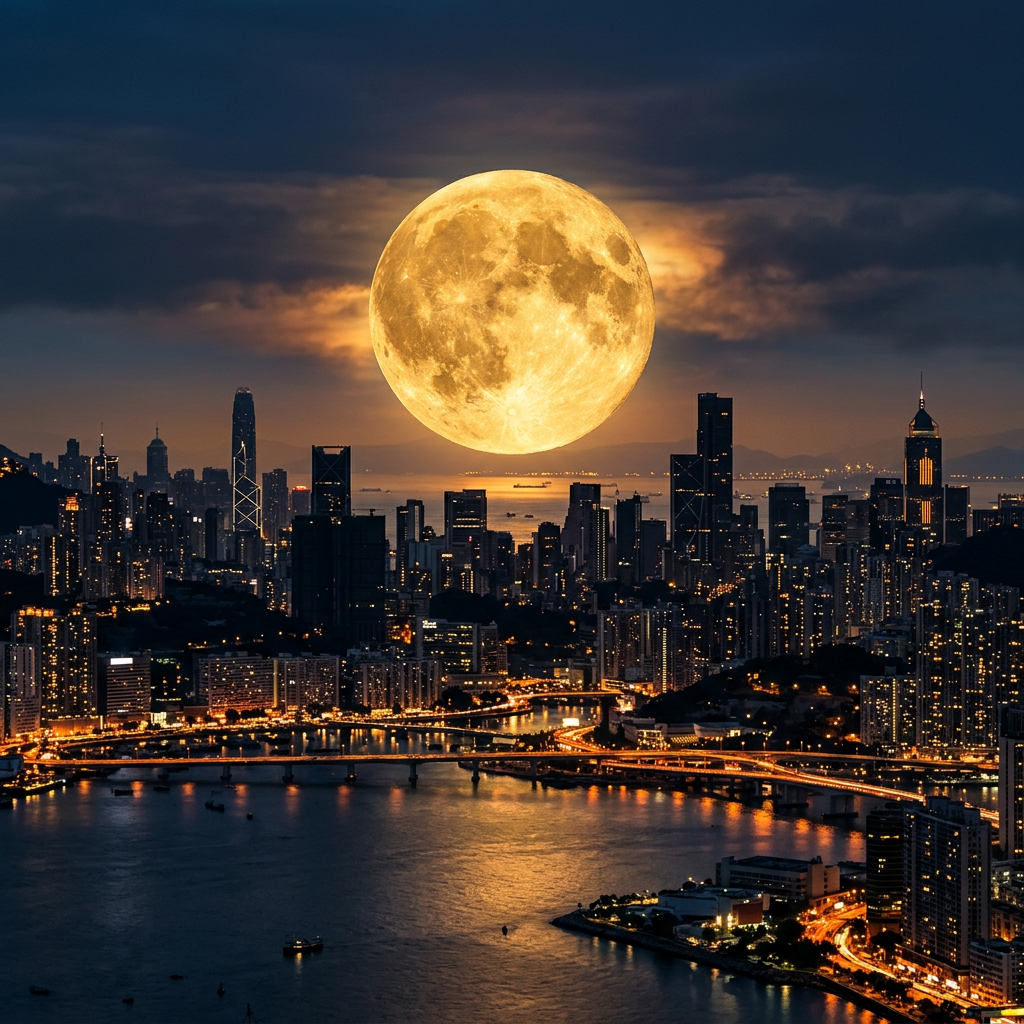
You have likely heard the old phrase “once in a blue moon” used to describe something incredibly rare, but this weekend, the universe is delivering the real thing. On Sunday, May 31, 2026, skywatchers around the globe will witness a brilliant celestial rarity as a second full moon rises within the exact same calendar month.
If you look up this Sunday night, you aren’t just looking at a standard full moon—you are witnessing a double-phenomenon that won’t happen again for years. Here is everything you need to know about the May 31 Blue Micromoon, including when to look up and what to expect.
The Science: Two Full Moons, One Month
Because a single lunar cycle takes roughly 29.5 days to complete, it doesn’t perfectly align with our standard calendar months. Every two to three years, the timing squeezes two full moons into a single month. Because May 2026 kicked off with a full “Flower Moon” on May 1st, the timeline perfectly lined up to give us a rare second full moon right on the month’s final day.
The “Micro” Twist
This isn’t just any standard blue moon. This weekend, the moon will actually be at its absolute farthest orbital point from Earth (known as apogee), sitting over 406,000 kilometers away.
This makes it a rare Micro Blue Moon. Because it is so far away, it will appear roughly 14% smaller and slightly fainter in the night sky than a standard full moon.
Will it actually turn blue?
No, the name is purely cultural. However, if you catch it at the right time, it will actually look much more dramatic. As it crests low on the eastern horizon right around dusk, atmospheric dust and light scattering will cause it to glow a massive, stunning sunset-orange or deep amber hue before it climbs higher and turns bright white.
When & How to Watch
- The Best Time: Look toward the eastern sky right after sunset on Sunday evening, May 31. Catching it right as it clears the horizon line is best—this is when the “lunar illusion” kicks in, making the moon look massive against buildings, hills, and trees.
- Where to find it: The moon will be tracking lower across the sky, glowing brightly right next to the constellation Virgo.
- Gear needed: Absolutely none. While binoculars or a basic camera zoom will reveal crisp crater details along the edges, the Micro Blue Moon will be completely stunning to the naked eye.
Are you planning on catching the final full moon of the month this Sunday? Drop a comment below with your city and let us know what the night sky looks like in your area!