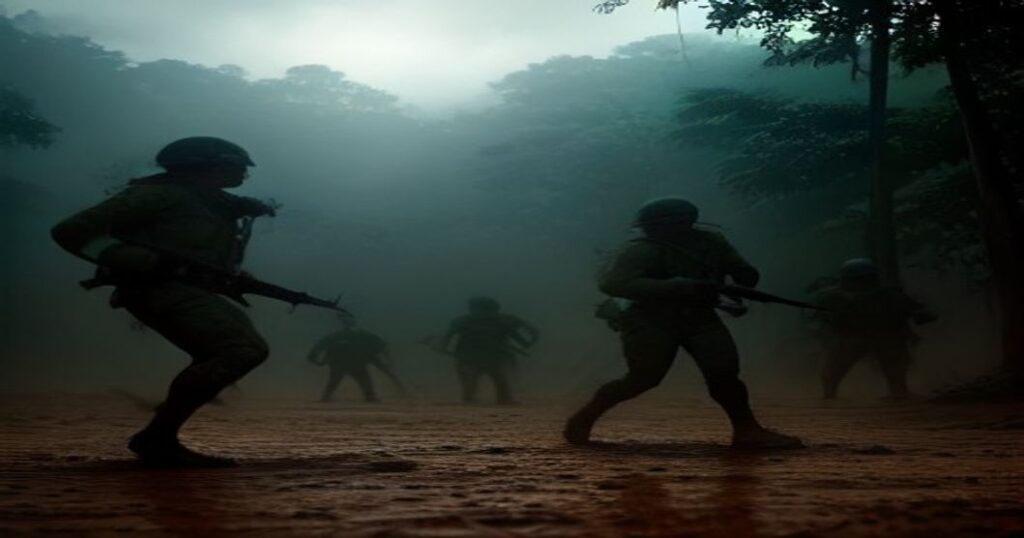
It was Christmas Eve, 1944, on the mud-slicked, malaria-ridden island of Guadalcanal. Sixty-five elite U.S. Marines—many of them former college football All-Americans and future NFL draft picks—strapped on makeshift gear for a brutal, full-contact tackle football game. They called it the “Mosquito Bowl.” Today, search engines are melting down as global audiences rediscover this legendary clash of gridiron titans on the eve of one of the Pacific War’s bloodiest battles.
With major cinematic buzz and military history appreciation sparking a sudden, massive resurgence in the story, the Mosquito Bowl has transcended history books to become a viral cultural phenomenon. This isn’t just about a game played in the dirt; it’s a haunting reminder of athletic genius, ultimate sacrifice, and a generation of heroes lost to the sands of Okinawa. Here is the fast-paced breakdown of why this legendary matchup is captivating the world right now.
1. The Clash of Gridiron Titans in the Mud
Before they were ordered to storm the beaches of Okinawa, the men of the 4th and 6th Marine Divisions argued over who had the superior football squad. What started as barracks trash-talk escalated into an officially sanctioned, highly organized game that drew thousands of combat-weary spectators to a crude dirt field cleared out of the Guadalcanal jungle.
The Play/Contract: The rosters read like an Associated Press All-America list, featuring stars from Wisconsin, Notre Dame, and Alabama. There were no pads, no helmets, and absolutely no holding back as these active-duty elite soldiers played a merciless game of tackle football on tropical terrain.
The Season Stakes: For these young men, the game was a fleeting, desperate return to normalcy. But the underlying stakes were unfathomably grim: they were playing for pride and brotherhood just weeks before executing some of the deadliest amphibious landings in military history.
2. The Tragic Aftermath of Okinawa
The true weight of the Mosquito Bowl lies in what happened after the final whistle blew. While the game itself ended in a hard-fought tie, the real battle was waiting on the horizons of the Pacific theater.
The Play/Contract: The tactical execution shifted instantly from complex trick plays on Guadalcanal to desperate survival in the mud of Sugar Loaf Hill. The athletic prowess that made them legends on the college campus was put to the ultimate test against entrenched enemy forces.
The Season Stakes: The casualty rate was devastating. Of the 65 Marines who played in the Mosquito Bowl, 15 were killed in action on Okinawa, and many more suffered life-altering wounds, cutting short what would have been historic post-war NFL careers.
3. The Hollywood Catalyst Igniting Search Trends
Why is this 1944 matchup suddenly dominating screens today? Public interest has surged due to renewed focus on cinematic adaptations capturing the raw scale of historic WWII combat, bringing Buzz Bissinger’s definitive chronicle of the game back into the limelight.
The Play/Contract: Production houses and streaming giants are increasingly looking for gritty, authentic, dual-narrative historical pieces that blend sports drama with high-stakes military action to capture the visceral intensity of both the gridiron and the battlefield.
The Season Stakes: In an era dominated by CGI spectacles, the raw, human truth of the Mosquito Bowl offers a captivating cultural anchor. The surge in search volume proves that the appetite for epic, real-world historical storytelling has never been higher.
| Stat Category | Mosquito Bowl Details (Dec 24, 1944) |
|---|---|
| Location | Guadalcanal, Solomon Islands |
| Participating Units | 4th Marine Division vs. 6th Marine Division |
| Final Score | 0 – 0 (Tie) |
| Estimated Spectators | Over 1,500 Marines |
| Total Players | 65 Marines (mostly ex-college stars) |
| Casualties in Later Battles | 15 Players Killed in Action (Okinawa) |
🧠 Brain Check
The story of the Mosquito Bowl forces us to confront a heavy reality: many of the country’s greatest athletic minds sacrificed legendary careers for a greater cause. Do you think modern sports culture has lost touch with this level of selflessness and duty, or is it unfair to compare the athletes of today to the Greatest Generation? Let us know your thoughts in the comments below!